
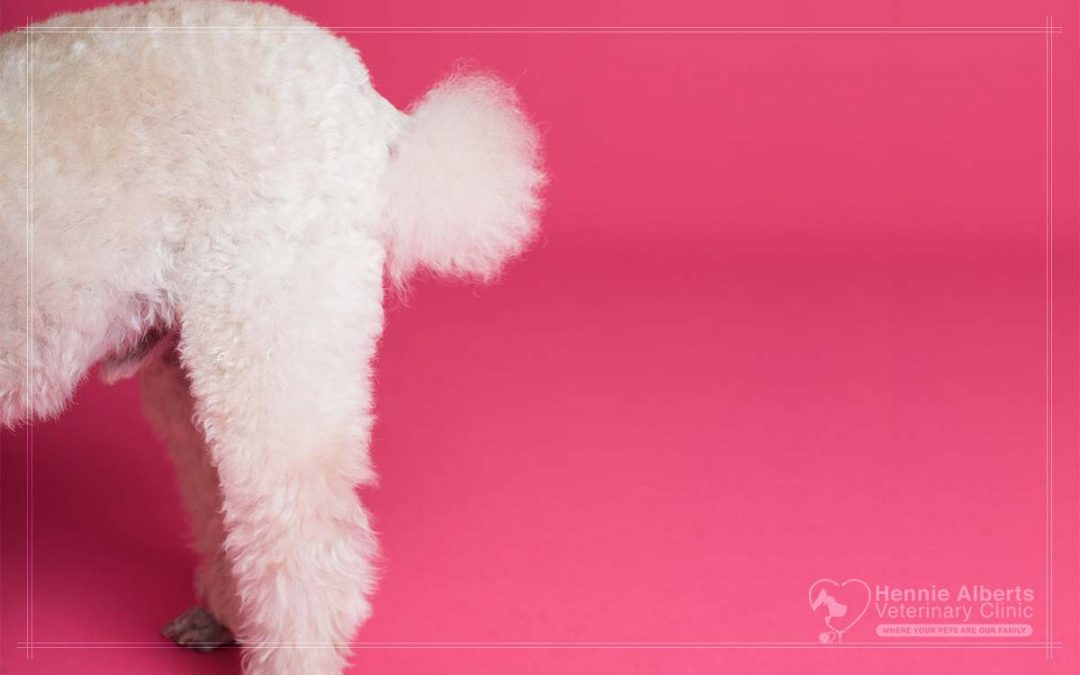
How many people think a dog sliding on its bum (scooting) means it has worms? This may be true in some circumstances, especially in puppies with high worm counts, but most often this is a sign of an issue with their anal gland, especially in small breed dogs.
What is an anal gland?
The anal glands or anal sacs are small glands found near the anus in many mammals, including dogs and cats. They are paired sacs located on either side of the anus between the external and internal sphincter muscles. The only known function of the anal glands is to produce small amounts of secretions, ranging in colour from yellow brown to grey. The fluid is watery to pasty in consistency. It is thought that these secretions are used to mark territory and identify the dog to other dogs. It has a stinky fish-like smell. Often, dogs will express these glands when they are scared.
Anal sac disorders involve impaction of anal sac fluid, inflammation of the sac, and abscess of the sac, which can lead to anal gland rupture. Impaction is the most common disorder of the anal gland. Symptoms are scooting; straining to defecate; itching/scratching; tail chasing; discharge from the anal glands; and licking or biting around the anus.
Many of the causes of anal sac issues are unknown. But predisposing factors are thought to be chronically soft faeces, recent bouts of diarrhoea, excessive glandular secretions, poor anal muscle tone, and retained secretions.
The sacs are considered enlarged if, during the physical exam, the anal sacs are easily palpable. The normal clear or pale yellow-brown secretion will have turned to a thick, pasty brown fluid if the anal glands have been impacted. Abscessed anal sacs will have a red-brown exudate and show signs of swelling and redness. The anal sacs may also be clearly ruptured.
To relieve the discomfort of impacted anal glands, you need to bring your dog in to have the glands expressed. This is a quick and inexpensive treatment. On average, dogs will come in every three months. For dogs with severe anal glands issues, these glands can be surgically removed, but only if absolutely necessary.

Image courtesy of Pure Pet Foods