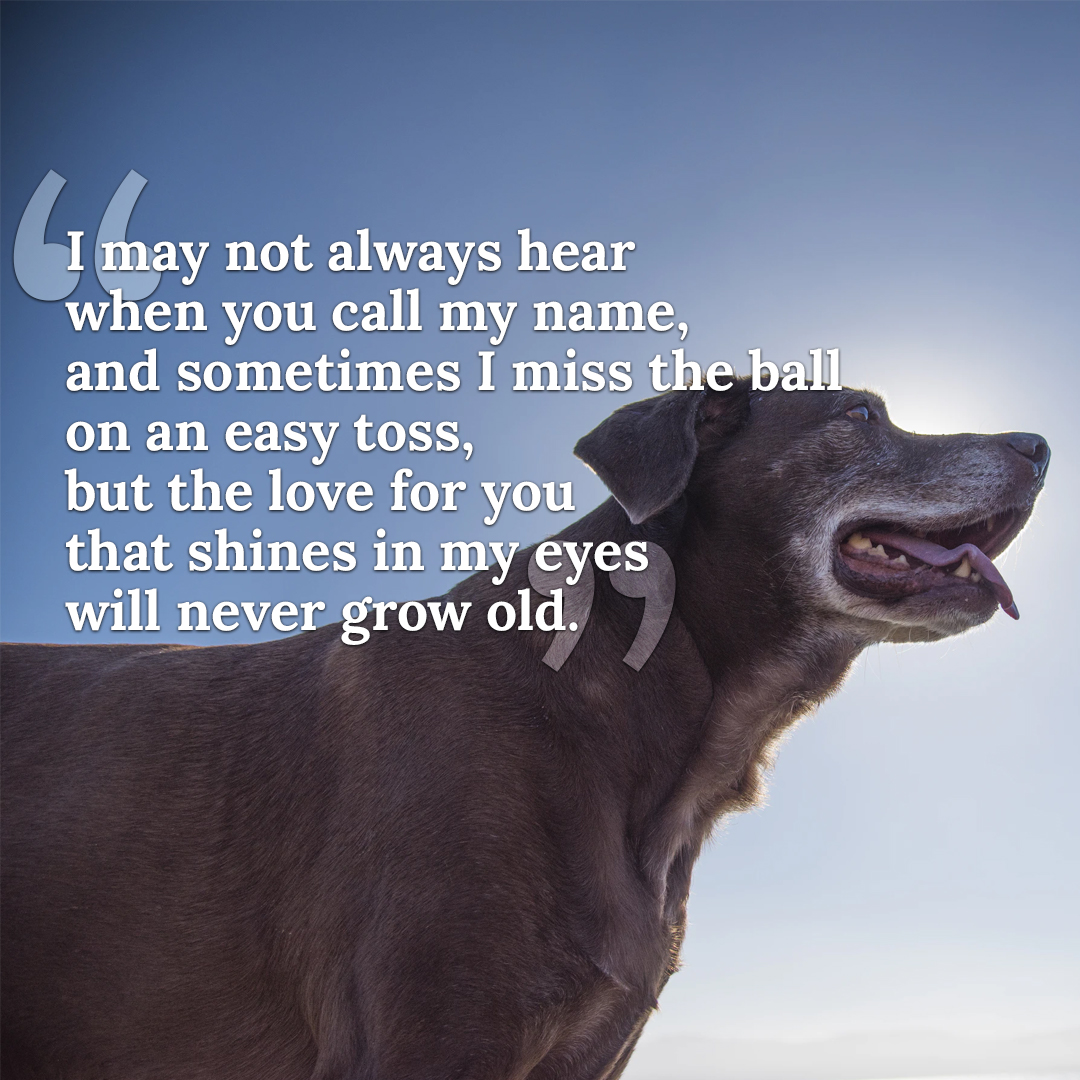
The aging process brings about a gradual reduction in your pet’s physical capabilities. While dogs and cats begin to undergo these changes starting at about age seven, different pets will show the various signs of growing old at different rates. The best time to recognise your pet’s “senior” status and need for extra TLC is long before advanced disabilities set in.
To increase the length and quality of your pet’s life, it is important to begin a process of prevention. By identifying some of your pet’s risk factors, treatment can be initiated prior to the onset of a medical problem.
Dental disease is a serious concern as pets get older. The spread of bacteria from the mouth into the pet’s bloodstream, when infections occur around the teeth, is an even more serious risk to the older pet’s health. The first step in good dental care is to have your pet’s teeth examined by your vet to determine the need for a dental. This is performed under anaesthetic and the tartar/ plaque is scaled of with a specialised dental machine and teeth with roots exposed are removed. We regularly run specials and advertise them on our various media outlets.
Obesity is one of the single most important risks to an older pet’s health. Since the older animal’s metabolism and activity level slows down, most older pets have a tendency to gain weight. Obesity is unhealthy in any pet, but it is especially harmful to an older animal’s joints, heart, and other organs. Let us help assess your pet’s weight and devise an eating plan.
Because your pet’s metabolism is slowing, you may notice an increasing intolerance to heat and cold. This happens because your pet produces less of the hormones that are critical for maintaining the body’s normal temperature.
Smell, sight, taste, and hearing will diminish as your pet ages. Many pets adapt to these losses very well, although there may be a decrease in appetite. For such pets, a highly nutritious, well-balanced diet is a must. Eye problems, such as glaucoma and cataracts, are more likely to develop in older pets. Nuclear sclerosis is also an age-related change in the density of the crystalline lens nucleus that occurs in all older animal and looks similar to cataracts.
Diseases of vital internal organs—heart, lungs, kidneys, and bladder—occur more frequently in older dogs and cats. As animals age, so do the organs. A complete health assessment of the senior dog and cat includes considerable attention to these organs along with dietary recommendations to promote good health. If these conditions are picked up early enough before clinical signs start, you can prolong your pet’s life as well as improve its quality? It is as simple as a blood test to check these organ enzyme levels. We are fortunate enough to have a blood machine at our practice to run these tests without having to send them away. It is also important for animals on chronic medications to have their organ function monitored regularly.
It is recommended to have these tests performed every one to two years to monitor any changes that may occur. It is only through early detection that many age-related illnesses may be slowed or prevented. Depending on the results, more frequent testing may be recommended.
Any change associated with eating, drinking, or defecation should be noted and discussed with your vet. These conditions are often associated with early stages of disease.
Take your older pet for regular senior check-ups, even if he or she seems to be well. It is always easier and less expensive to prevent a problem rather than treat a problem. Discuss which food is recommended for your senior pet. There are many prescription diets that will help prolong their lives as well as treat or prevent many conditions.
Your older pet is a real member of the family. With proper care and regular testing, your loyal companion should be able to live a long and healthy life.