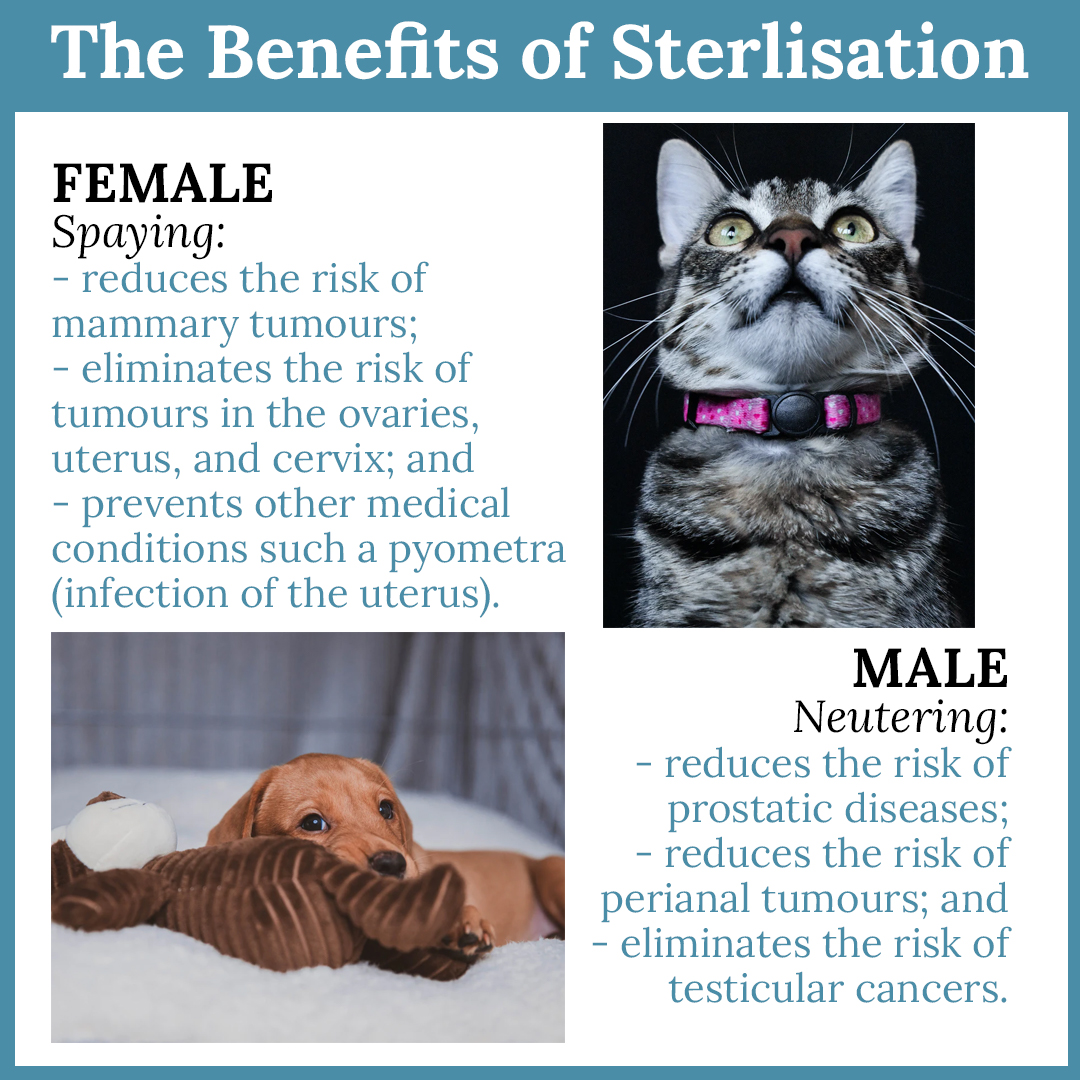
This article will focus on the benefit of sterilisation (spaying and neutering). Did you know spaying and neutering is not only to prevent unwanted litters? There are many health and behavioural benefits to doing this.
Spaying your pet before her first heat cycle (6–8 months) greatly reduces her chances of developing mammary cancer when she is older. Each time she comes into heat she is exposed to oestrogen, and the more this happens the higher her risk is for mammary cancer down the line. What better motivation is there to spay your dog than preventing cancer?
Bitches that come on heat repeatedly are also at risk of developing infection in the uterus. Once this occurs, the infected uterus must be removed, and sterilising an already-sick dog could be life-threatening to the animal.
Another benefit is preventing the hassle of cleaning up after your dog while on heat, which is not pleasant for an indoor dog. The heat period lasts three weeks, which is a great inconvenience.
By sterilising your bitch, you also avoid the changes in temperament associated with being on heat, which can lead to fights. Behavioural changes during heat also affect male dogs in the area, who often become aggressive and excitable and are more likely to become involved in fights.
Male dogs that are sterilised at an early age (six months) are less likely to roam, show aggression, or mark their territory (inappropriate urination). If they are only sterilised when they are older, they have likely developed some of these habits already, which are likely to stay with them for the rest of their lives.
Neutering your male dog or cat prevents testicular tumours and may prevent prostate problems. Neutering also decreases the possibility of perianal tumours. How often have you seen male dogs with very large protruding anuses or lumps on their anus? This is caused by testosterone and neutering will prevent this.
It is also wise to have your cat sterilised. If your cat is sterilised at an early age (six months), it is less likely to roam or spray urine. Because neutered cats are less likely to roam, the threat of abscesses caused by bites and diseases transmitted by fighting such as feline AIDS and leukaemia are greatly reduced.